
…or How I Spent 30 Years Collecting Records Only to Spend 30 More Digitising Them
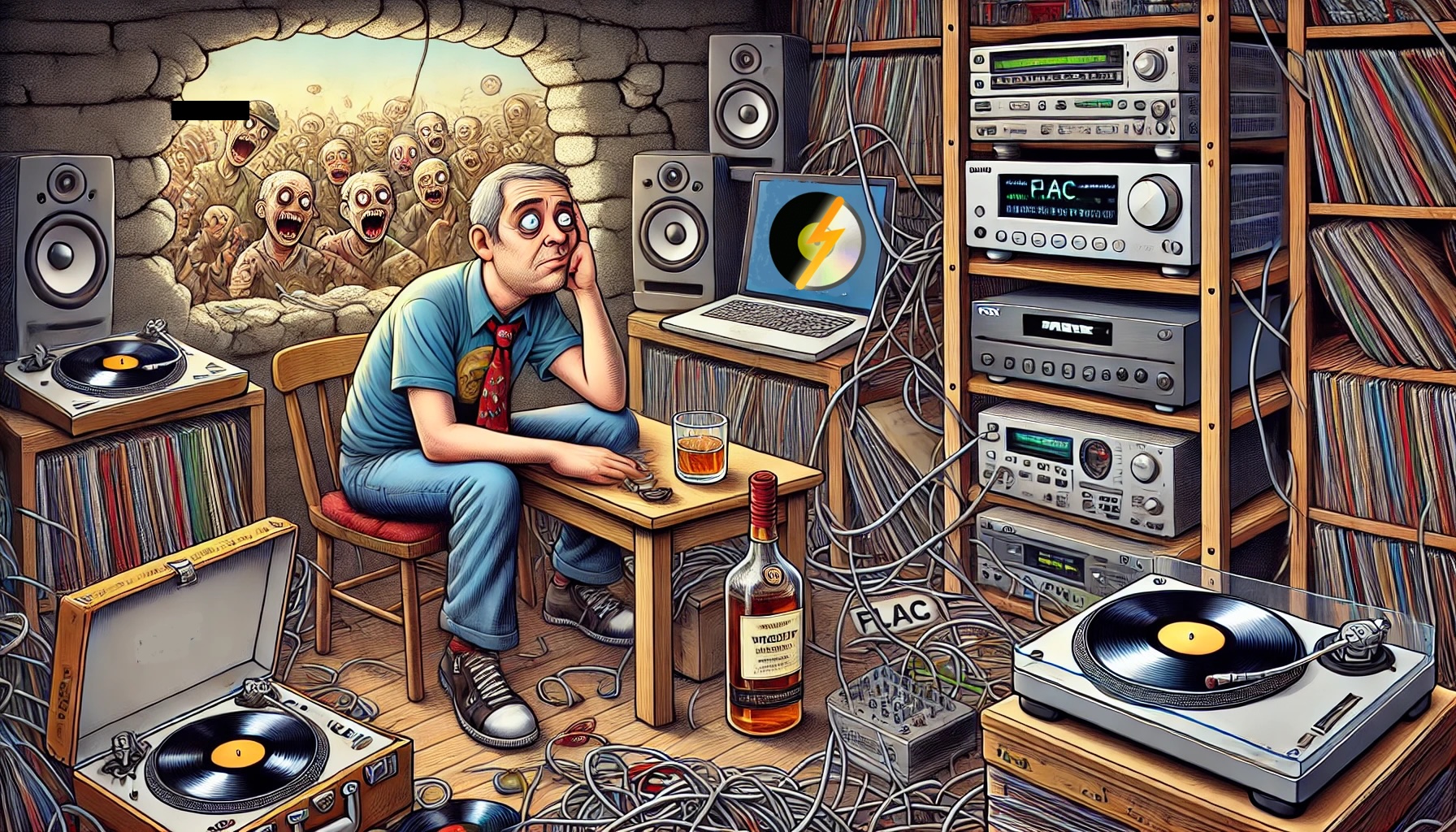
So, you’ve heard about streaming, right? You know, that magical service where you can access 100 million songs, at any time, with just a flick of your finger on a smartphone screen. Convenient, easy, and possibly the answer to world peace. But I, your humble vinyl obsessive, look at that wonder of modern technology and scoff. Because why stream effortlessly when you can spend hours setting up an elaborate system, carefully ripping vinyl records, one at a time, with all the care of a master jeweller polishing a diamond?
Let’s be clear here: I don’t dislike streaming. I even have Plex set up to stream my digitised vinyl collection. But that’s the point: it’s not Apple Music, it’s my music, digitised painstakingly from my thousands of vinyl records collected over 30 years, a personal trove that isn’t just music, it’s a testament to my persistence, stubbornness, and absolute refusal to do things the easy way. And, should the zombie apocalypse come and the internet fall apart, I’ll have my FLAC files while the rest of you wonder why Taylor Swift won’t buffer.
Now, you may ask, what’s involved in this truly noble process? Oh, only a turntable, phono stage, audio interface, Mac, VinylStudio Pro software, hours of time, and a healthy dash of obsessiveness. I’ll walk you through the details, but let’s be real: this is an undertaking only for the dedicated or the truly deranged.
The Workflow of a Madman (AKA Me)
It all starts with my Audio-Technica AT-LP5 turntable, spinning a record that I’ve likely had since I was too young to know better. The Ortofon 2M Blue cartridge delicately traces the grooves, pulling out that warm, rich analog sound that only vinyl can produce. But, of course, vinyl sound doesn’t magically turn into FLAC files. No, no, we have steps to follow.
First, the sound goes through my iFi Zen Phono stage, which amplifies the fragile signal while making sure it doesn’t get muddied by distortion. It’s like giving a gentle pat to the sound, saying, “There, there, let’s clean you up for the next stage.”
From there, the amplified signal gets sent to the Audient iD14 audio interface, which acts as the gatekeeper to the digital world. It converts the precious analog signal into ones and zeros, but in a way that ensures I don’t lose that vinyl magic in the process.
And where do these precious digital bits go? Into VinylStudio Pro on my Mac, a software designed specifically for people like me … people who look at a streaming service and think, “Why not make this more difficult?”
One thing I forgot to say is about cleaning … it makes sense to clean your vinyl before recording. Even new records come out of the factory dirty sometimes. I use a SPINCARE Record Cleaning Machine. Simple and effective. Failing to clean will mean you’ll have to fix more later.
VinylStudio Pro: The Real Hero (Or Villain?)
Here’s where the real magic (or madness) happens. VinylStudio Pro is like a Swiss Army knife for vinyl rippers. It doesn’t just record the sound; it pulls metadata from online sources to fill in the album info and artwork automatically. The software even detects track breaks for me, ensuring that each song is split just right.
And let’s not forget the automated pop and crackle removal. You know those little imperfections that give vinyl its “character”? Well, VinylStudio Pro scrubs them out, because if I’m going through all this trouble, the least I can do is get a clean copy of my record.
This might sound efficient, but trust me, each record takes time. The software is somewhat automated, sure, but I still sit there with my glass of whiskey, watching the progress bar inch across the screen like it’s 1999 and I’m waiting for a dial-up connection. My wife, ever the supportive partner, often walks by and rolls her eyes, as if to say, “You could be done with this in 30 seconds with Spotify, but sure, let’s do it the hard way.”
Why Bother When Apple Music Exists?
At this point, you might be wondering why on earth I’m doing this. Why not just lean into the digital age, pay my streaming subscription, and be done with it? Well, you see, not everything is on Apple Music or Spotify. Some of these records I’ve spent decades hunting down aren’t available in the streaming ether.
Worse, some of them have been remixed and not in a good way. You know what I mean: compressed, “modernised” versions that remove the soul from the original recordings. When I listen to my vinyl rips, I’m listening to the original pressings, with all their quirks intact (or lovingly edited out by my automation software, but still).
The Real Reward: Streaming My Vinyl From Anywhere
Here’s where I indulge in some tech geekery. Once I’ve gone through the elaborate process of ripping my vinyl, I store everything as FLAC files on my Synology DS220+ NAS. And here’s the kicker: with Plex, I can stream those files to any device, anywhere in the world. So, yes, I could just open Apple Music, but when I’m travelling or at work, I can stream the same rich, warm sound of my vinyl, preserved in all its FLAC glory, from the cloud.
Let’s be honest: this is the ultimate man-cave hobby. It’s not just about collecting vinyl or having a big digital music library, it’s about knowing that every single track was personally curated and cared for. Paired with the right whiskey (highly recommended), it’s an evening ritual that connects me to my collection in a way no streaming service could. And while my wife may roll her eyes, I suspect that deep down, she knows that this little obsession will keep me occupied for hours, thus freeing up the TV for her.
The Zombie Apocalypse Plan
And if the zombie apocalypse comes? Well, while the world is collapsing and streaming services are down, I’ll be in my bunker, listening to FLAC rips of my records. Taylor Swift’s catalogue may have vanished from the digital universe, but my vinyl-based music collection will live on.
So, yes, it’s an insane amount of work in a world where effortless streaming is the norm. It’s obsessive, time-consuming, and probably unnecessary. But for those of us who are committed to preserving the authenticity of music, it’s an obsession worth indulging. And if I end up with the world’s only zombie-proof vinyl collection, well, I’ll consider that a win.