
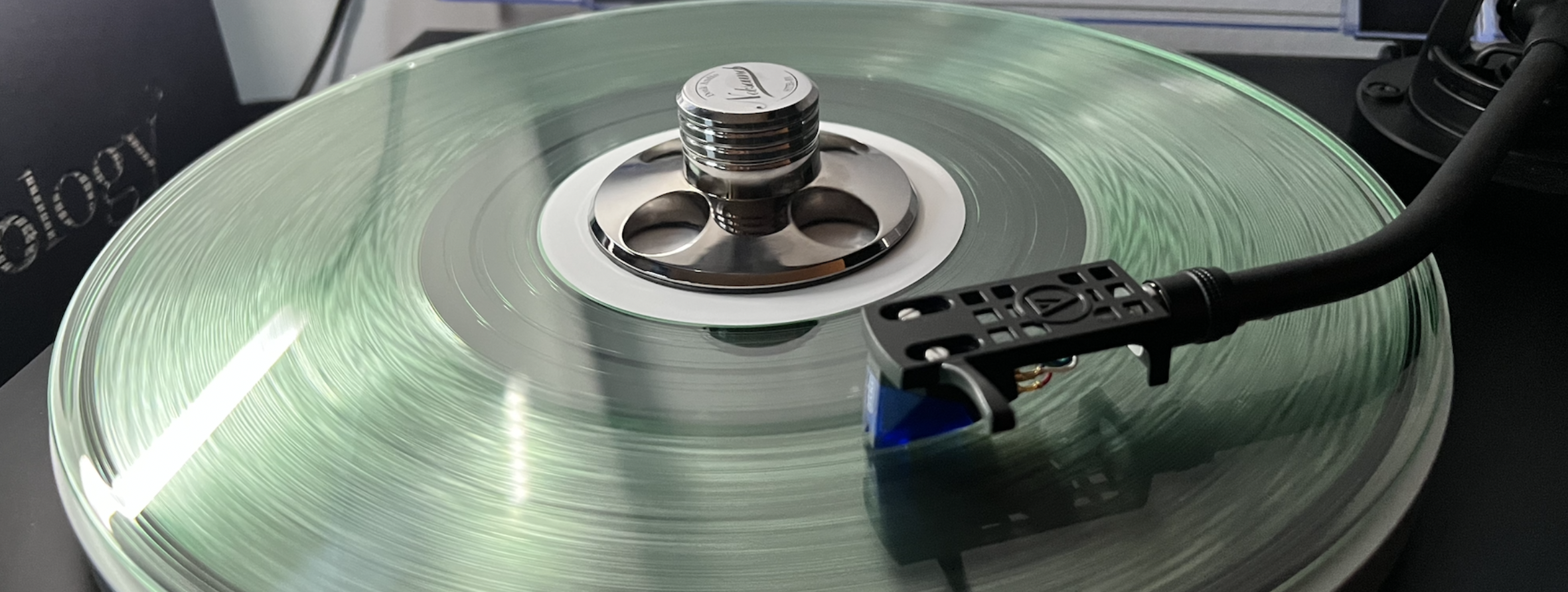
I was flipping through a stack of CDs the other day. Ones I ripped to FLAC years ago and then forgot about, when I noticed the little FBI warning stickers on the jewel cases. Proper relics. It struck me that these discs, bought between 1995 and 2010 mostly, are rapidly turning into something closer to legal documents than entertainment. Immutable proof that a group of humans once gathered in a room, pressed record, and made something that mattered to them.
18 or 19 months. That’s all it took for that kind of certainty to start disappearing. Let me lay out exactly what happened, because the timeline is now part of music history whether we like it or not.
March 21, 2024: Suno releases v3.
April 10, 2024: Udio opens its beta to the public.
Those two dates. Before them, AI music was a curiosity. Vocals that warbled in odd places, arrangements that collapsed halfway through, drums that sounded like someone hitting cardboard boxes in a corridor. Interesting, occasionally eerie, but you always knew.
After those dates you stopped knowing.
Run this test yourself. Take a Udio track from May 2024, drop it into a playlist between real indie releases from the same month, play it for friends. They pick the wrong one nine times out of ten. Not because they’re deaf, but because the new tools had suddenly learned timing, micro-dynamics, the tiny imperfections that used to give the game away. By summer 2024 the better prompts were producing masters that could sit comfortably on BBC 6 Music without anyone batting an eyelid.
The numbers since then are grim if you make music for a living.
Spotify’s transparency reports (buried in footnotes, as usual) show they now detect and remove suspected AI tracks continuously, and that’s only the obvious bot-farmed rubbish. The convincing stuff probably sails straight through. A disturbing proportion of new uploads on the major streaming platforms in 2025 are either entirely AI-generated or so heavily augmented that the human contribution is essentially ceremonial. Royalties per stream have continued their inevitable slide toward zero.
Session musicians have felt it first and hardest. One bassist in Nashville with credits on half a dozen Grammy-nominated records, went from 40 sessions a year to 4. The phone simply stopped ringing once the new tools could lay down a bass that locked perfectly to the kick and never asked for coffee. And he’s not the only one telling a similar story.
So where does this leave us?
With a very simple requirement that is about to become non-negotiable: proof.
If you release recorded music from 2025 onward and you want anyone to care (really care, not just tap play and forget) you are going to have to show your working. Not as a marketing gimmick, but as table stakes.
We need to see:
- Raw multitrack stems uploaded with cryptographic timestamps.
- Continuous video from the control room (one camera, no cuts, date bug burned in).
- Plugins that embed session metadata directly into the master file.
- Third-party certification services that issue a digital seal (Human Art Music, Verified Tracks, and a couple of others already operating).
- Bandcamp rolling out a “verified human” flag that requires at least a one-take phone video of the lead vocal.
My own habits have shifted without much conscious effort. When something new lands that I’m tempted by (very infrequent!), the first thing I look for now is evidence. No making-of photos, no stems, no sign the recording actually took place? I give it a pass. I didn’t set out to be strict about it; it just feels pointless otherwise. Why pay for something that might have been typed in thirty seconds by someone who doesn’t exist?
The irony is that my pre-2024 catalogue has quietly become priceless in a way it never was before. Every CD I bought in the 90s, every record I picked up in the 00s, every cassette I recorded off the radio as a kid: they’re now primary sources. You can’t retroactively generate a genuine 1993 pressing of Siamese Dream with the correct matrix numbers. That specific object is a one-off. The scarcity is real in a way digital files never were, and it solves the provenance problem automatically.
I still hunt, of course. Last month I found a 1998 pressing of Moon Safari in an Espoo second-hand shop for €15. Held it in my hand and felt the same small thrill I always did, only now with an extra layer: this one is bulletproof.
The split is coming, and it’s going to be surprisingly clean.
Down in the trenches there will be an endless sea of algorithmically generated background noise: perfectly serviceable, instantly forgettable, free or a couple of euros a month. Up above will be the stuff that comes with receipts: the albums where you can watch the singer get the take on the sixth attempt, hear the moment the guitarist finally nails the solo, see the coffee cups and the tangled leads and the bored dog asleep under the mixing desk.
That’s the music I’ll keep paying for. That’s the music I’ll keep shelving.
The rest is just bullshit.